
Fire, blueberries and treaty rights
Episode 10
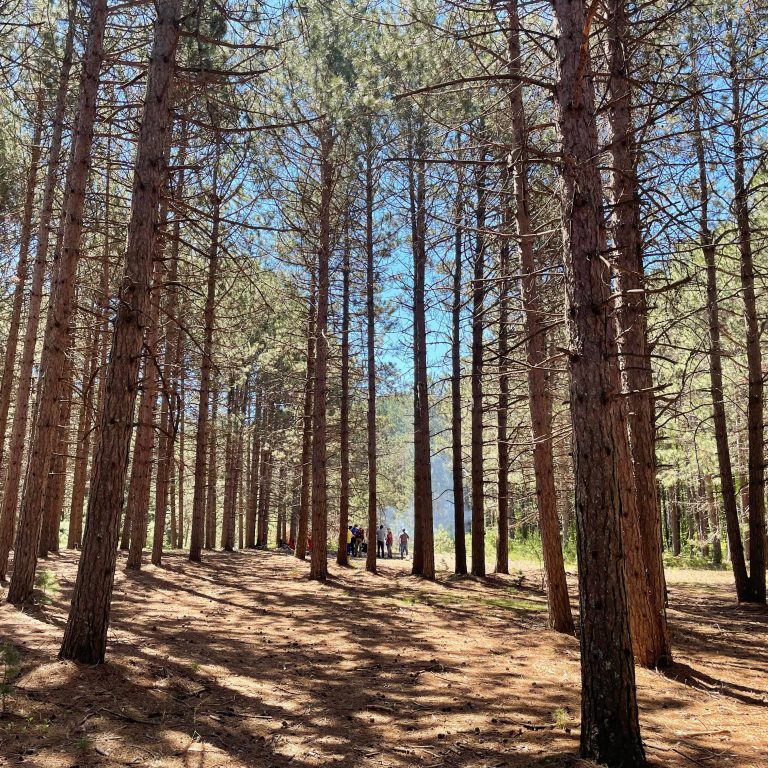
Today, we’re talking about red pine forests, blueberries, treaty rights, and how they all converge around fire on a tiny split of land jutting out into Lake Superior – what we now call Minnesota and Wisconsin Points. The story starts at the opening ceremony of a Wisconsin Sea Grant-funded project called Nimaawanji’idimin giiwitaashkodeng: We are all gathering around the fire.
Melonee Montano, currently a graduate student at University of Minnesota, tells us about the importance of cultural fire for the Anishinaabe people. ”When I started really reconnecting with fire…I couldn’t help thinking about how by bringing back fire, we might actually be able to start helping to heal from that intergenerational and historical trauma.”
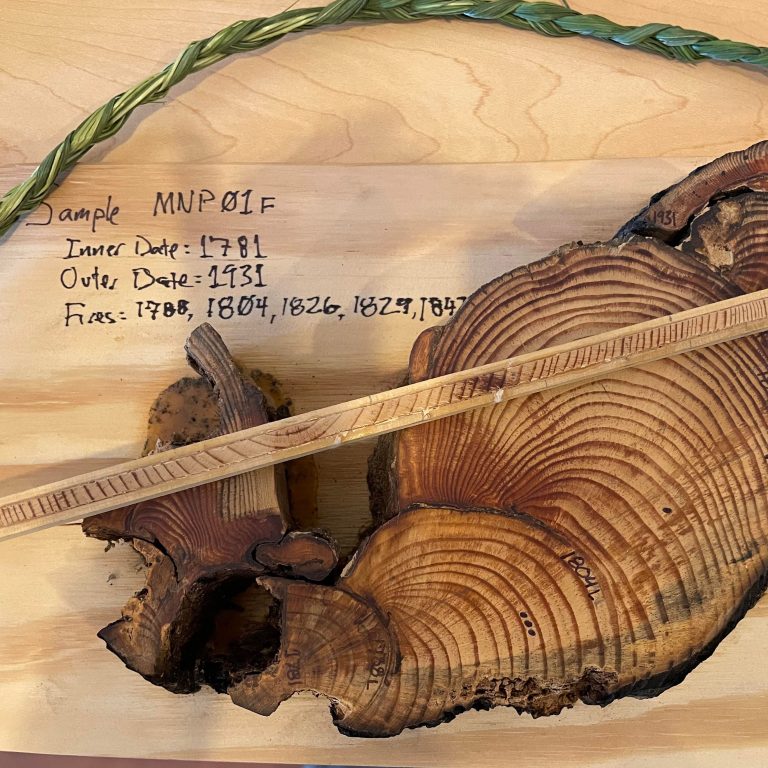
Then, professor and dendrochronologist Evan Larson takes us on a walk in the woods to decipher the stories left by elder trees. Evan and his students are taking samples of dead and down trees on Wisconsin and Minnesota point in order to record evidence of fire and peel scars in the tree rings.
Overall, the team will gather stories about fire, blueberries and Anishinaabe knowledge, with the eventual goal of restoring fire to Wisconsin and Minnesota points. Wildland firefighter Damon Panek shares his vision for collaboratively restoring fire to this culturally significant area. “I think that the biggest part with Minnesota Point and Wisconsin Point is making sure that the greater communities who share this space with us now recognize that these landscapes were maintained by tribal people with fire for as long as those landscapes have been there. [And the beauty of that space] is a direct result of fire on the landscape.”
Thanks to our guests
- Melonee Montano, University of Minnesota
- Evan Larson, University of Wisconsin-Platteville
- Damon Panek, Fond du Lac Band of Lake Superior Chippewa
- Mocha, Valerie, Ashla, Emily, Project research team
- Marie Zhuikov, Wisconsin Sea Grant